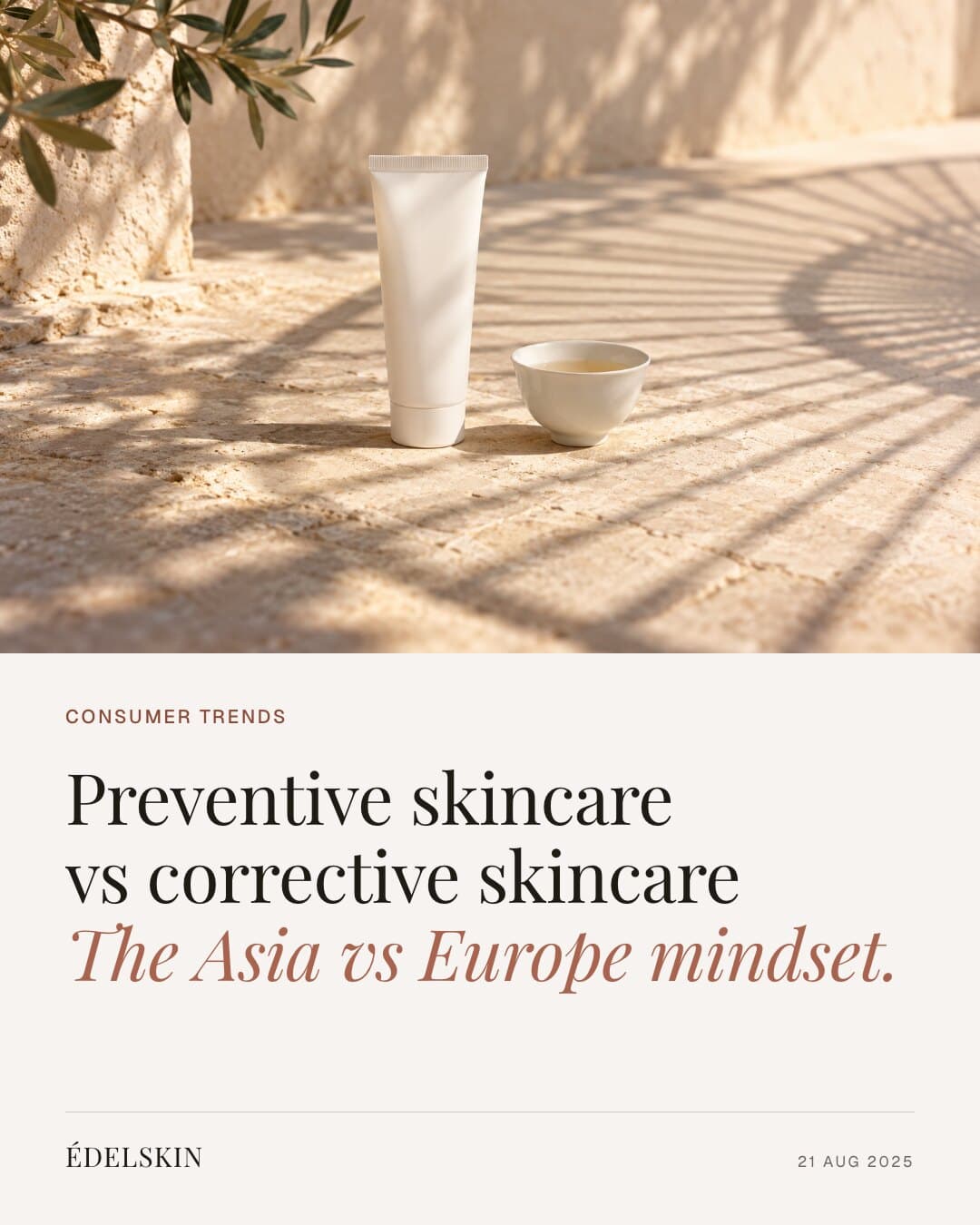
Preventive Skincare vs Corrective Skincare: The Asia vs Europe Mindset
The global skincare industry is shifting from corrective beauty toward preventive skin health.
Over the past decade, the global skincare industry has begun shifting from a corrective beauty model toward a preventive skin health philosophy.
Historically, many Western skincare markets focused on correcting visible skin concerns such as wrinkles, pigmentation, or loss of elasticity after they appeared.
In contrast, several Asian beauty markets have long emphasized prevention, maintenance, and long-term skin health.
This difference in mindset influences everything from consumer routines to product formulation strategies and is increasingly shaping global skincare innovation.
Preventive Skincare Trends Are Expanding Globally
Global preventive skincare trends are gaining momentum as consumers increasingly view skincare as part of long-term skin health management.
Rather than waiting for visible signs of aging, consumers are investing earlier in products designed to maintain skin quality and resilience.
Preventive skincare typically focuses on:
- Protecting the skin barrier
- Maintaining hydration balance
- Preventing inflammation and environmental damage
- Supporting long-term collagen preservation
This shift is particularly visible among younger consumers who begin structured skincare routines earlier than previous generations.
Asia Skincare Routines Focus on Long-Term Skin Health
Traditional Asia skincare routines reflect this preventive philosophy.
Instead of relying on a single corrective product, Asian consumers often follow multi-step routines designed to maintain skin balance over time.
These routines frequently include:
- Gentle cleansing
- Hydrating toners or essences
- Barrier-repair serums
- Moisturizers
- Daily sun protection
Sun protection in particular plays a central role in Asian skincare habits due to strong consumer awareness of UV exposure as a primary contributor to premature skin aging and pigmentation.
This routine-based approach encourages consistent skin maintenance rather than occasional corrective treatment.
Anti-Aging Skincare Global Trends Are Converging
Recent anti-aging skincare global trends suggest that Western skincare markets are gradually moving toward a more preventive approach.
Several factors are contributing to this shift:
- Growing dermatological awareness
- Increased understanding of the skin barrier
- Consumer interest in long-term skin resilience
- Greater access to ingredient education online
Ingredients such as peptides, ceramides, antioxidants, and niacinamide are increasingly used not only for correction but also for preventive skin maintenance.
As a result, the distinction between cosmetic skincare and preventive dermatological care is gradually becoming less defined.
The Rise of Beauty From Within
One of the clearest differences between Asian and European skincare philosophies is the growing importance of “beauty from within” in Asian beauty markets.
While traditional Western skincare has largely focused on topical treatments designed to correct visible skin concerns, many Asian consumers approach skincare through a more holistic perspective that includes nutrition, lifestyle, and internal supplementation as part of skin health.
In markets such as Japan and South Korea, ingestible beauty products have long been integrated into everyday routines. Collagen drinks, beauty supplements, and functional beverages are widely used alongside topical skincare to support hydration, elasticity, and overall skin resilience.
Common ingredients in beauty-from-within products include:
- Collagen peptides supporting skin structure
- Hyaluronic acid for hydration support
- Antioxidants such as astaxanthin and vitamin C
- Probiotics that support skin microbiome balance
- Plant-based anti-inflammatory compounds
These supplements are typically used in combination with topical skincare, creating a preventive approach that targets skin health both internally and externally.
Why Asia Leads the Beauty + Wellness Convergence
The integration of skincare and wellness is particularly advanced in Asia, where beauty routines often reflect broader health philosophies emphasizing balance and prevention.
Rather than waiting for visible signs of aging to appear, many consumers adopt long-term strategies focused on maintaining skin health through both skincare and nutrition.
This has contributed to the rapid growth of the nutricosmetics market, which includes supplements and functional foods designed specifically to improve skin appearance and resilience.
Japan and South Korea remain among the most mature markets for ingestible beauty products, while China has seen rapid growth in beauty supplement consumption driven by younger consumers interested in preventive skin health solutions.
As a result, the boundaries between skincare, nutrition, and wellness are increasingly converging.
What This Means for Global Skincare Brands
For brands expanding internationally, understanding the preventive skincare philosophy is increasingly important.
Consumers in Asian markets often expect skincare strategies that combine:
- Preventive routines
- Barrier-supporting formulations
- Nutritional supplementation
- Long-term skin health maintenance
Brands that focus exclusively on corrective anti-aging claims may struggle to resonate with consumers who prioritize prevention and daily skin health management.
As global consumer behavior evolves, the integration of skincare, wellness, and preventive dermatology, long established in Asia, may increasingly shape the future of the global beauty industry.
About ÉDELSKIN
ÉDELSKIN is an international commercialisation company helping beauty, wellness and healthcare brands enter and grow in Asia’s consumer markets. It works as the brand’s direct-to-consumer commercial arm, and the brand keeps full ownership and control.
How ÉDELSKIN works