The global skincare industry is undergoing a fundamental transformation. After decades dominated by marketing-driven brand narratives and aspirational imagery, the premium segment is increasingly defined by clinical evidence, dermatological validation, and transparent ingredient science. This shift towards clinical skincare is not a passing trend — it represents a structural realignment of how consumers evaluate, purchase, and remain loyal to premium skincare brands.
For brands positioned at the intersection of Swiss quality and clinical efficacy, this evolution presents an unprecedented opportunity. Understanding the forces driving this shift is essential for any premium skincare brand seeking to remain relevant and competitive in the years ahead.
The Clinical Skincare Market: Scale and Trajectory
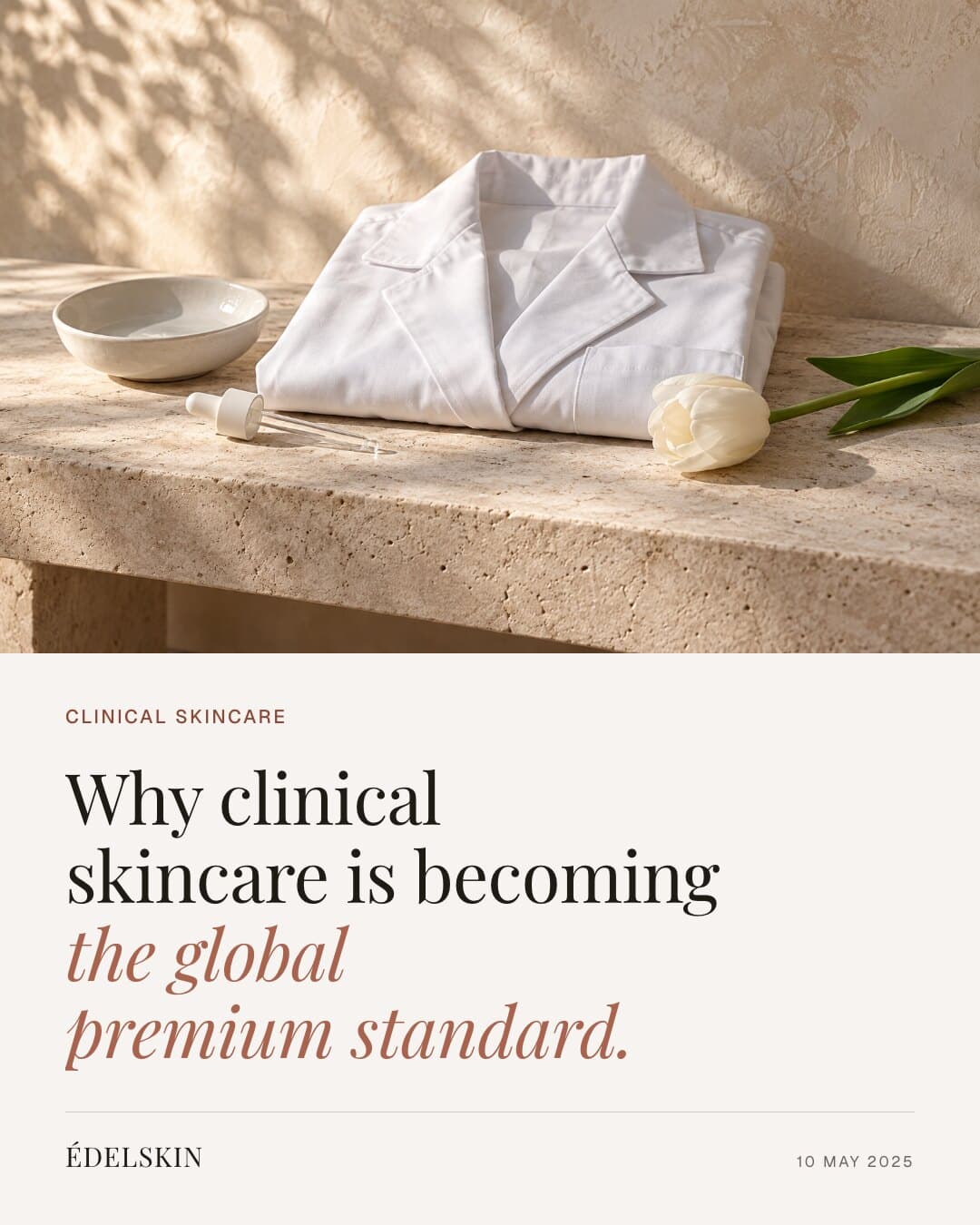
The global clinical skincare market has experienced remarkable growth over the past five years. Industry analysts estimate the dermocosmetics and clinical skincare segment is now valued at over USD 70 billion globally, with projected compound annual growth rates of 8-10% through the end of the decade. This growth significantly outpaces the broader beauty and personal care market, reflecting a decisive consumer shift towards products with proven efficacy.
Several factors are driving this acceleration. The pandemic-era focus on skin health and self-care created lasting behavioural changes, with consumers investing more in their daily skincare routines and gravitating towards products that deliver measurable results. Simultaneously, the democratisation of skincare knowledge through social media and educational content has created a more informed consumer base that demands scientific substantiation rather than accepting marketing claims at face value.
The rise of "skinimalism" — a consumer preference for fewer, more effective products over extensive multi-step routines — has further benefited clinical skincare brands. Products that can demonstrate concentrated efficacy and multifunctional benefits command premium pricing and stronger consumer loyalty than their conventional counterparts.
Asia Leading the Clinical Skincare Revolution
While the clinical skincare trend is global in scope, Asia is unquestionably at its forefront. South Korea's "glass skin" phenomenon, Japan's long-standing pharmacosmetic tradition, and China's rapidly growing professional skincare segment have collectively positioned the region as the world's most important market for clinical and dermatologist-recommended products.
In China, the clinical skincare segment has been growing at approximately 25% annually, far outstripping the overall beauty market growth rate. Chinese consumers, particularly in tier-one and tier-two cities, have become extraordinarily sophisticated in their skincare knowledge, routinely evaluating products based on active ingredient concentrations, clinical trial data, and dermatological endorsements. This level of consumer sophistication creates ideal conditions for brands with genuine clinical credentials.
South Korea continues to set global beauty trends, and the current emphasis on barrier repair, microbiome-friendly formulations, and dermatologist-developed products reflects a broader Asian consumer evolution towards science-first skincare. Japanese consumers, traditionally among the world's most ingredient-conscious, have similarly embraced clinical skincare products that offer transparent efficacy data and pharmaceutical-quality formulation.
Hong Kong and Singapore serve as regional bellwethers for these trends, with their cosmopolitan, highly educated consumer bases often among the earliest adopters of clinical skincare innovations. For European brands entering Asia, these markets provide valuable early signals of product-market fit and consumer reception.
What Consumers Actually Want from Clinical Skincare
Understanding the specific consumer expectations driving the clinical skincare boom is essential for brands seeking to capitalise on this trend. Research consistently identifies several key attributes that clinical skincare consumers prioritise when making purchasing decisions.
Ingredient transparency ranks highest among consumer priorities. Today's premium skincare consumers want to know exactly what is in their products, at what concentrations, and why each ingredient is included. Brands that provide detailed ingredient breakdowns, explain the science behind their formulations, and openly share clinical testing results build significantly stronger consumer trust than those relying on proprietary "secret formulas" or vague efficacy claims.
Clinical validation is the second critical factor. Consumers increasingly expect to see evidence from controlled studies, dermatological assessments, or independent laboratory testing. Claims supported by peer-reviewed research or partnerships with dermatological institutions carry significantly more weight than subjective consumer satisfaction surveys alone.
Sensorial experience remains important even in the clinical segment. Consumers expect clinical products to deliver a premium application experience — elegant textures, subtle fragrances or fragrance-free formulation, and fast absorption. The days when clinical skincare could succeed purely on efficacy while neglecting the user experience are over. Modern clinical brands must deliver on both dimensions.
The Growing Influence of Dermatology
One of the most significant drivers of the clinical skincare revolution is the growing influence of dermatologists and skin health professionals in consumer purchasing decisions. Social media has transformed dermatologists from behind-the-scenes practitioners into influential public voices on skincare, with platforms like Instagram, YouTube, and Xiaohongshu enabling doctors to educate millions of consumers directly.
This "derm-fluencer" phenomenon has created a new paradigm where product recommendations from qualified dermatologists carry more weight than traditional celebrity endorsements or beauty editor reviews. Brands that have established credible relationships with dermatological professionals benefit from a powerful form of third-party validation that resonates deeply with today's evidence-seeking consumers.
In Asia, the integration of dermatology and skincare is particularly pronounced. Medical aesthetic clinics have become important retail channels for premium clinical skincare, offering consumers a trusted environment where product recommendations come with professional authority. This channel is growing rapidly across the region and represents a significant opportunity for brands with genuine clinical positioning.
Swiss skincare brands are exceptionally well-positioned to benefit from this trend, given Switzerland's strong associations with medical excellence, pharmaceutical innovation, and scientific rigour. A Swiss clinical skincare product recommended by a dermatologist carries a powerful combination of geographic provenance and professional endorsement that few competitors can match.
Implications for Premium Skincare Brands
The rise of clinical skincare as the global premium standard carries significant implications for brand strategy, product development, and market positioning. Brands that fail to adapt to this new reality risk losing relevance in the fastest-growing segments of the beauty market.
First, investment in clinical substantiation is no longer optional for premium brands — it is a competitive necessity. Brands must be prepared to invest in rigorous testing, publish their results transparently, and back their claims with credible scientific evidence. This requires a shift in marketing budgets from purely creative campaigns towards a balanced approach that includes clinical research and evidence generation.
Second, distribution strategy must evolve to reflect the clinical positioning. Selling through medical aesthetic clinics, partnering with dermatological institutions, and participating in professional skincare events are becoming essential elements of a credible clinical skincare brand's go-to-market strategy.
Third, brands must embrace education as a core marketing function. In the clinical skincare era, the brands that win are those that help consumers understand the science behind their products. Educational content — from ingredient explainers to clinical study summaries to skin health guides — builds the kind of informed consumer relationship that drives long-term loyalty.
For édelskin and our partner brands, the clinical skincare revolution validates our fundamental approach to premium distribution. We have always believed that genuine quality, transparent science, and uncompromising standards are the foundation of lasting brand success. As the market catches up to this philosophy, brands with authentic clinical credentials and Swiss quality heritage are better positioned than ever to lead the next era of global premium skincare.