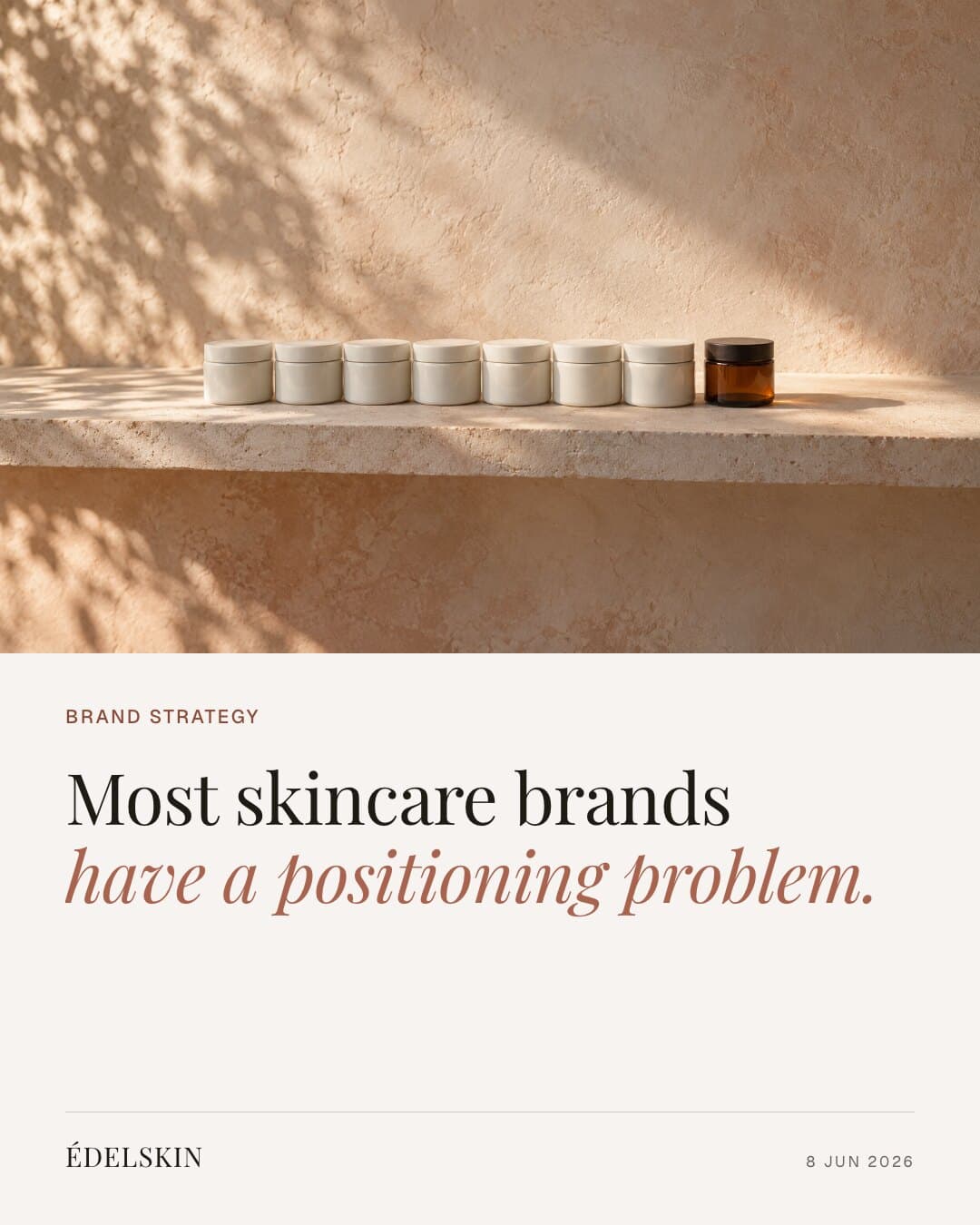
Most Skincare Brands Have a Positioning Problem
In a market full of good products, clear positioning is often what determines whether consumers understand and trust a brand.
When skincare brands struggle to grow, the first instinct is often to look at the product.
The formulation.
The ingredients.
The claims.
The packaging.
But in many cases, the problem is somewhere else entirely.
It is positioning.
Because today, consumers are surrounded by good products. The market is full of them.
What is increasingly difficult is creating a brand that consumers immediately understand.
Good Products Are Everywhere
The skincare industry has become extraordinarily competitive.
Consumers can choose from:
- Global brands
- Indie brands
- Clinical brands
- Luxury brands
- Dermatologist-developed brands
- Science-led brands
Many offer excellent formulations.
Many offer similar benefits.
This means product quality alone rarely creates differentiation.
Clarity Creates Advantage
Consumers make decisions quickly. Often before they have tried a product.
What influences those decisions is not only formulation. It is perception.
Consumers ask themselves:
- Who is this brand for?
- Why does it exist?
- What makes it relevant?
- Why should I trust it?
Strong positioning answers these questions immediately.
Weak positioning leaves consumers uncertain.
And uncertainty rarely drives purchase.
Premium Is Not a Positioning Strategy
One of the most common mistakes in skincare is assuming that "premium" is a position.
It is not.
Premium describes a price level.
Positioning explains why the brand deserves to exist.
Consumers increasingly expect brands to stand for something meaningful beyond luxury language and premium packaging.
What This Means for Brands
Many brands continue to focus primarily on product development.
But increasingly, the brands that scale are those that invest equally in how they are understood.
Positioning influences:
- Trust
- Relevance
- Perception
- Differentiation
And ultimately, growth.
Because in a market full of good products, the brands that win are often the brands consumers understand most clearly.
Sources
About ÉDELSKIN
ÉDELSKIN is an international commercialisation company helping beauty, wellness and healthcare brands enter and grow in Asia’s consumer markets. It works as the brand’s direct-to-consumer commercial arm, and the brand keeps full ownership and control.
How ÉDELSKIN works