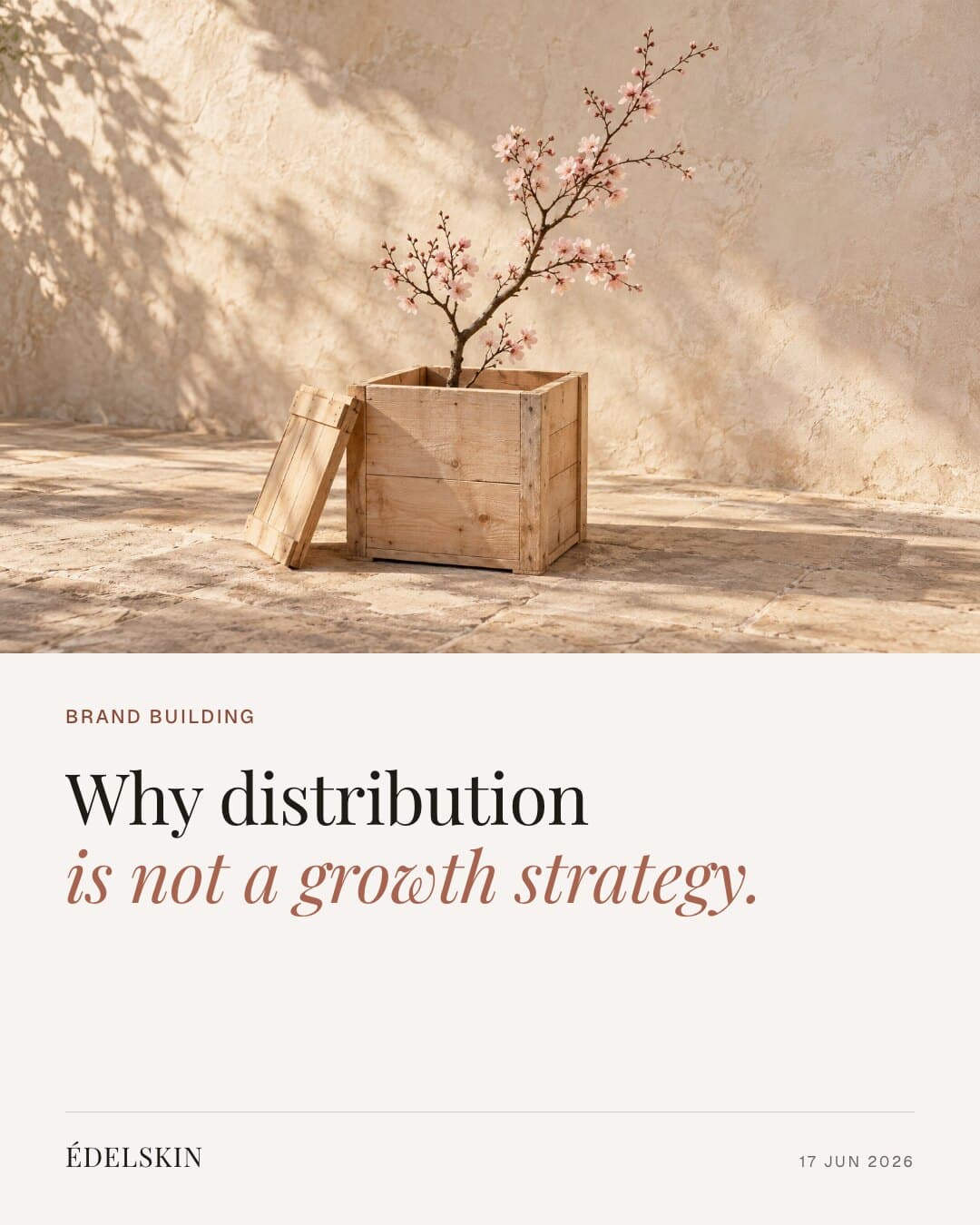
Why Distribution Is Not A Growth Strategy
Distribution creates access, not demand. Growth requires awareness, education, relevance, and a reason for consumers to choose the brand.
For many skincare and dermaceutical brands, distribution is often seen as one of the most important milestones in the expansion process.
Securing a distributor, obtaining retail listings, or launching on a major marketplace creates a sense of progress and momentum. It is often viewed as evidence that a brand is successfully entering a new market.
And to some extent, it is.
Without distribution, consumers cannot access a product.
The problem is that access and growth are not the same thing.
One of the most common misconceptions in beauty is that distribution creates demand.
In reality, distribution creates access, not consumer demand.
The two are fundamentally different.
Over time, we have seen brands secure excellent partners, broad availability, and strong retail exposure, yet still struggle to scale. Not because the products were not good. Not because the opportunity was not there.
More often, the challenge was that consumers still needed a reason to choose the brand.
In today's skincare market, consumers are faced with an enormous number of choices. New products launch every day. Claims are increasingly similar. Competition continues to intensify across all price segments.
Availability alone is no longer enough.
Consumers need to understand what makes a brand relevant. They need to trust it. They need to believe it offers something different or meaningful within an already crowded category.
This is particularly true in Asia, where consumers are highly informed, digitally connected, and often exposed to both international and local brands simultaneously.
The brands that grow successfully are rarely the ones that focus only on distribution. They are the brands that build awareness alongside availability, invest in education alongside retail, and create demand alongside access.
Distribution remains essential.
Without it, growth cannot happen.
But distribution should be viewed as an enabler of growth, not growth itself.
The brands that understand this distinction are often the ones that scale most successfully over time.
Sources
About ÉDELSKIN
ÉDELSKIN is an international commercialisation company helping beauty, wellness and healthcare brands enter and grow in Asia’s consumer markets. It works as the brand’s direct-to-consumer commercial arm, and the brand keeps full ownership and control.
How ÉDELSKIN works